

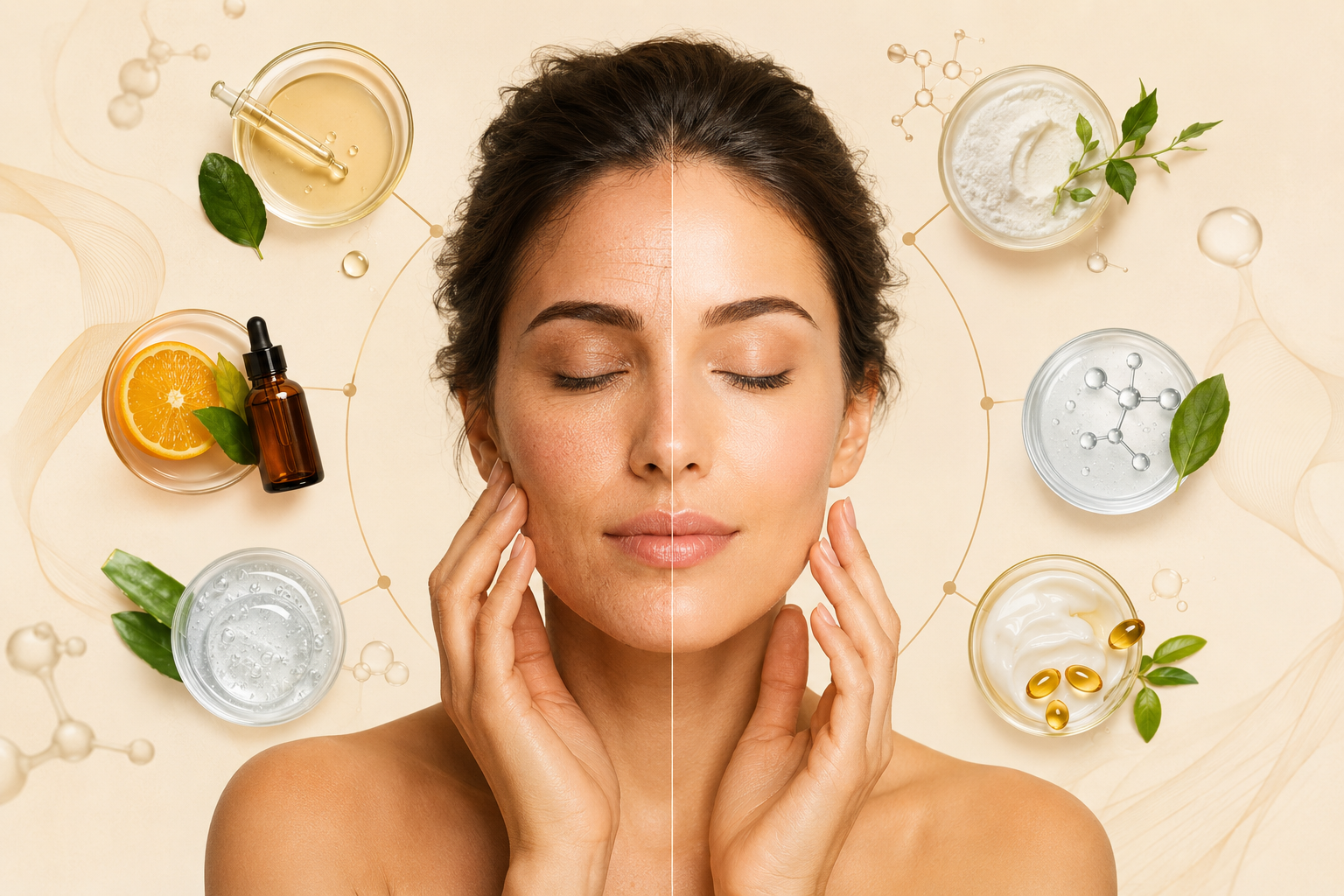
Anti-ageing promises are everywhere, aren’t they? Products claiming to erase wrinkles, reverse ageing, or make you look 10 years younger.
Sounds promising, doesn’t it?
But here’s the thing: not all anti-ageing ingredients are created equal.
With new skincare products popping up every week, it’s easy to feel overwhelmed and lost in the sea of serums and creams. So, how do you separate the magic from the miracle workers? The answer lies in understanding what your skin actually needs as it ages. It starts with understanding what your skin needs as it ages. Your skin’s needs are simple: hydration, protection, and some serious repair work. Focus on ingredients that deliver, and you’ll be golden. The rest is just noise, after all.
Why Does Skin Start Looking Older?
Ageing is a totally natural process, but have you ever wondered why it becomes visible on the skin before almost anywhere else on your body?
Your skin is repeatedly exposed to the outside world. Almost every other day, it faces sunlight, pollution, dust, changing and harsh weather conditions, and countless environmental stressors. As we age, skin’s natural repair process slows down, collagen production drops, and moisture levels dip. It’s no surprise people reach for multiple products hoping for a quick fix, but the truth is, youthful-looking skin isn’t about one magic product. The good news is that with a few simple tweaks to your routine, you can support your skin’s natural health and glow. Want to know the secret to radiant skin? Stay tuned for our top tips and tricks!
Let’s take a closer look at the ingredients that truly deserve a place in an age-defying skincare routine.
Anti-Aging Ingredients That Actually Work
- Retinol: The Gold Standard of Anti-Aging
If the anti-ageing ingredients had a hall of fame dedicated to them, retinol would probably be the first inductee. Extracted straight from Vitamin A, it’s a skin-savvy superstar with decades of research backing. Think of it as a personal instructor or coach for your skin cells, constantly encouraging them to perform better.
Benefits of Retinol
- Reduces fine lines and wrinkles
- Improves skin texture
- Helps fade pigmentation and acne marks
- Promotes renewal of smoother skin
How to Use It
Start slow with retinol, especially if you’re new to it. Use it 2-3 nights a week, then gradually increase frequency. Apply at night, as it can make skin sensitive. Don’t forget sunscreen during the day – it’s a must.
- How Vitamin C Helps Reduce Signs of Ageing
Have you noticed how sometimes your skin can look tired even when you’re well-rested?
Stressors from the environment can generate free radicals that lead to dullness, uneven skin tone, and premature ageing. Vitamin C helps in fighting this damage while supporting collagen synthesis (Collagen synthesis refers to the process by which cells produce collagen, a crucial protein in the human body.
Benefits of Vitamin C
- Helps to reduce dark spots
- Supports collagen production
- Protects against environmental stressors
- Promotes a more even skin tone
How to Use It
Apply Vitamin C serum in the morning after cleansing, then moisturise. Follow up with broad-spectrum sunscreen for daytime protection.
- Hyaluronic Acid: The Hydration Magnet
Dehydrated skin can age faster than you’d expect. Fine lines and wrinkles start to creep in, and skin loses its natural bounce. That’s where hyaluronic acid comes in – a natural moisture magnet that attracts and retains water, keeping skin hydrated, plump, and radiant. It’s a simple yet powerful ingredient that can make a big difference.
Benefits of Hyaluronic Acid
- Provides intense hydration
- Helps skin appear pleasantly soft
- Softens the appearance of fine lines
- Supports skin barrier
How to Use It
Apply it to slightly damp skin before using moisturiser to help focus on hydration more effectively.
4.Peptides: The Skin CommunicatorsPeptides don’t usually attract the same level of attention as retinol or Vitamin C, but they play an important role in keeping your skin healthy. You can think of peptides as messengers. They communicate with your skin cells and encourage processes that help in maintaining the firmness and resilience of your skin.
Benefits of Peptides
- Support collagen production
- Strengthen the skin barrier
- Aids skin repair processes
- Reduce visible signs of ageing
How to Use Them
Peptides are gentle, so use them morning or night. Pair with hydrating ingredients and moisturisers for best results.
- Niacinamide: The Multi-Tasking Expert
Some of the skincare ingredients specialise only in one job. But Niacinamide comes with a whole package if multi-tasking determined to do several things. It is a form of Vitamin B3 and addresses multiple skin issues simultaneously, positioning it as one of the most versatile ingredients available.
Benefits of Niacinamide
- Reduces the appearance of enlarged pores
- Strengthens the skin barrier
- Helps balance oil production
- Minimises redness and irritation
How to Use It
Niacinamide is well-tolerable and can be integrated into both morning and evening routines.
- Ceramides: The Barrier Builders
Imagine your skin has a barrier like a brick wall. The cells in your skin act as the bricks, while ceramides act as the concrete holding every brick together. As we age, natural ceramide levels in our body also begin to decline, which in turn makes it easier for the moisture to escape and environmental irritants to penetrate into our skin.
Benefits of Ceramides
- Strengthen the skin barrier
- Prevent moisture loss
- Improve hydration
- Reduce dryness
How to Use Them
Ceramide can be found in many moisturisers and is most effective when applied after serums to secure hydration and support barrier health.
Final Thoughts: Building an Effective Anti-Aging Routine
In a world with an enormous variety of skincare trends and bold marketing claims, Retinol, Vitamin C, hyaluronic acid, peptides, niacinamide, and ceramides continue to cut through the noise because these rockstars address the real issues that make our skin age: hydration, collagen production, skin barrier health, and protection from environmental damage. One common myth is that piling on anti-ageing ingredients works wonders – nope. Ageing is natural; the goal is healthy, vibrant skin, not overnight miracles. Give your skin what it needs, and it’ll thank you.